
Dr. Lucy Anning
Centre for Africa-China Studies (CACS)
University of Johannesburg,
South Africa
- Introduction
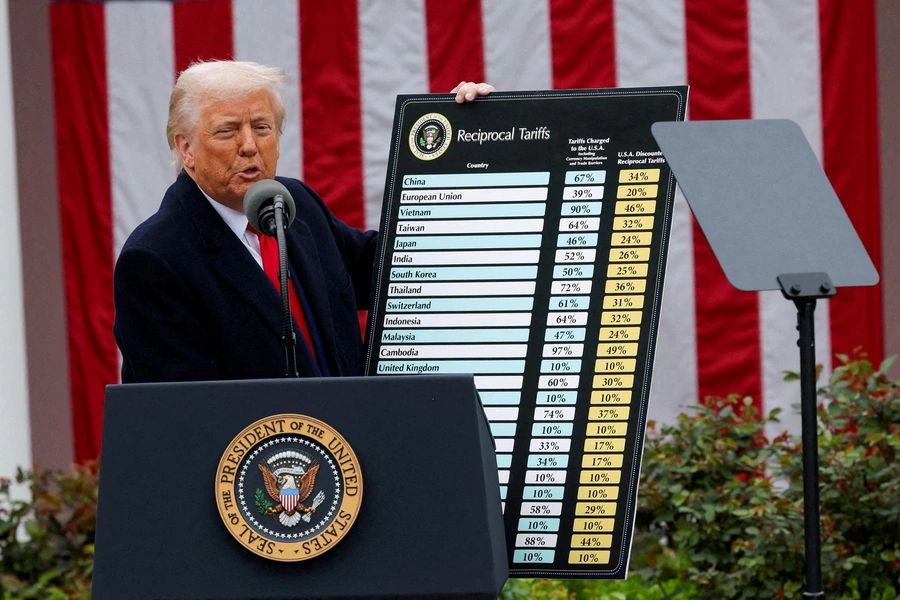
The Trump era marked a seismic shift in U.S. trade policy, where tariffs became tools of political assertion rather than mere economic instruments. Far from being a technocratic adjustment, the imposition of trade barriers unfolded as a bold narrative of nationalism, strategic rivalry, and electoral calculus. This article explores how trade tariffs under Trump transcended economic rationale, revealing a calculated entanglement of politics, populism, and protectionism. By dissecting their motivations, mechanisms, and consequences, we uncover a deliberate disruption of global norms—reshaping alliances, unsettling markets, and redrawing the contours of economic diplomacy. In this interplay, tariffs became not just policy but powerful political statements.
- Politicizing Trade through Tariffs as Tactical Levers in the Trump Era
In early 2025, President Donald Trump reignited his protectionist crusade with a sweeping 25% tariff on all steel and aluminum imports, framing the decision under national security prerogatives (CNN Politics, 2025). This maneuver signaled more than economic recalibration, as it marked the transformation of trade policy into a political weapon. Under the guise of the International Emergency Economic Powers Act (IEEPA), the administration redefined tariffs as strategic tools to pursue far-reaching political ends, from curbing immigration to combating drug trafficking. By embedding national security rhetoric into economic discourse, Trump’s approach blurred traditional boundaries, elevating tariffs into symbols of sovereignty, strength, and domestic resolve. This fusion of trade and politics reflected a calculated departure from multilateralism, reshaping America’s global posture while energizing domestic political narratives.
- The Motivations Behind the Tariff Escalation

The Trump administration’s tariff escalation was far from a conventional economic adjustment—it was a politically charged response to cross-border challenges. Major trading partners, including Canada, Mexico, and China, were squarely targeted, with tariffs positioned as leverage to influence foreign cooperation on issues like illegal immigration and narcotics trafficking. A 25% tariff was imposed on imports from Canada and Mexico, though Canadian energy exports received a reduced 10% rate. Chinese goods faced an additional 10% tariff (The White House Fact Sheet, 2025). These measures, cloaked in the language of national accountability, reflected a deeper agenda: to externalize domestic insecurities and recast economic relations as extensions of political pressure. By aligning trade penalties with broader geopolitical grievances, the administration transformed tariffs into instruments of foreign policy coercion, thus asserting control, signaling strength, and reshaping alliances under the banner of America First.
- Economic Repercussions, Global Responses and Diplomatic Strains
The imposition of tariffs triggered swift and significant reactions both domestically and internationally. Canada and the European Union announced retaliatory measures, with the EU unveiling countermeasures on up to €26 billion ($28 billion) worth of American goods, including tariffs on boats, bourbon, and motorbikes. These retaliations highlighted the interconnected nature of global trade and the potential for escalating trade wars.
Domestically, industries reliant on imported materials, such as automotive and construction, faced increased production costs. The agricultural sector also braced for potential retaliatory tariffs on exports, exacerbating concerns among farmers and agribusinesses. Economists warned of potential stagflation, with rising consumer costs coupled with slowed economic growth.
In the legal and diplomatic sphere, the administration\’s use of the IEEPA to justify tariffs faced legal scrutiny. Major business groups, including the Chamber of Commerce and the Consumer Technology Association, considered lawsuits challenging the legality of the tariffs, arguing that the invocation of national emergency powers lacked clear congressional authorization. These potential legal battles underscored the contentious nature of the administration\’s trade strategies.
Diplomatically, the tariffs strained relations with longstanding allies. Canadian officials decried the measures as unjustified, emphasizing the deep economic ties between the two nations. The European Union\’s swift retaliatory actions further highlighted the potential for a protracted trade conflict, complicating international alliances and economic partnerships.

- Long-Term Implications and Strategic Considerations
The Trump administration\’s tariff policies represent a pivotal moment in U.S. trade history, reflecting a departure from multilateral cooperation towards a more unilateral, protectionist approach. The integration of political objectives into trade policy raises critical questions about the efficacy and consequences of such strategies. While intended to bolster domestic industries and address national security concerns, the tariffs have introduced volatility into global markets and uncertainty among international partners.
As the global economy continues to evolve, the long-term impacts of these tariffs remain to be seen. Policymakers must weigh the immediate political gains against potential economic drawbacks, considering the broader implications for international trade relations and economic stability.
- Conclusion
The Trump-era tariffs revealed a paradigm shift, one where trade policy became a battleground not just for economic leverage but for political symbolism and strategic defiance. Far beyond economic calculus, tariffs were weaponized to project national will, challenge global norms, and rally domestic support under a populist banner. This fusion of politics and protectionism disrupted alliances, unsettled markets, and redefined the tools of diplomacy. As the lines between economic policy and political theater blurred, the consequences extended well beyond spreadsheets, reshaping global perceptions of American leadership. The Trump administration’s tariff strategy thus serves as a cautionary tale: when economic instruments are co-opted for political gain, the ripple effects can outlast their immediate intent. Navigating this new terrain demands not just economic foresight but political maturity—where global interdependence is not sacrificed at the altar of nationalist ambition.
References
CNN Politics, 2025. Trump Imposes 25% Tariffs on Steel and Aluminum. Retrieved from https://edition.cnn.com/2025/02/10/politics/tariffs-steel-aluminum-trump/index.html?utm_source=chatgpt.com
The White House Fact Sheet, 2025. President Donald Trump Imposes Tariffs on Imports from Canada, Mexico, and China. Retrieved from https://www.whitehouse.gov/fact-sheets/2025/02/fact-sheet-president-donald-j-trump-imposes-tariffs-on-imports-from-canada-mexico-and-china/?utm_source=chatgpt.com