
Mercy Olajumoke Akinloye
Senior Research Fellow
DevAfrica Institute
Introduction: Another Summit, Another Set of Promises?
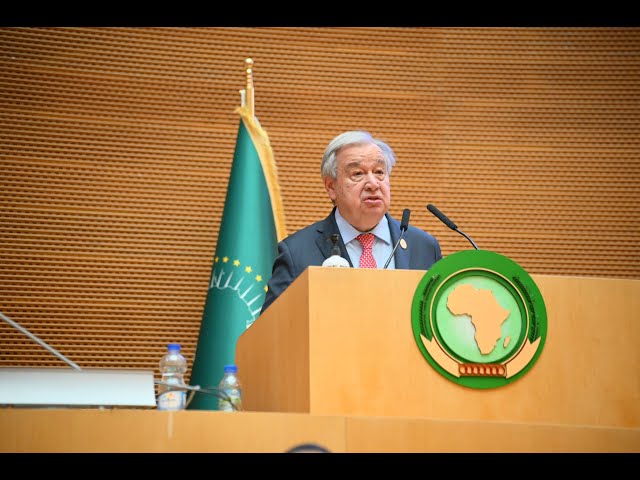
The 38th African Union (AU) Summit, held on February 15–16, 2025, in Addis Ababa, Ethiopia, focused on the theme “Justice for Africans and People of African Descent Through Reparations” (African Union, 2025) This year’s summit addressed the long-standing demand for reparatory justice, a topic that has gained increasing prominence due to the enduring socioeconomic inequalities caused by colonialism, slavery, and systemic racial discrimination. A key moment of the summit was the presence of United Nations Secretary-General António Guterres, who delivered a powerful address emphasizing the urgent need for reparatory justice and the restructuring of global financial and governance systems to end Africa’s marginalization. Guterres described Africa as the victim of “two colossal and compounded injustices: colonialism and the trans-Atlantic slave trade”, underscoring their lasting impact on economic and social structures (Guterres, 2025) . However, this is not the first time the AU has debated reparations. Over the years, numerous resolutions and declarations have been made, yet little progress has been seen in securing actual compensation or structural changes (United Nations High Commissioner for Human Rights, 2024) . The critical question remains: Will this summit lead to real change, or will it be another cycle of diplomatic rhetoric with no concrete outcomes?
- The AU’s Call for Reparatory Justice: A Game-Changer or Political Rhetoric?
Reparatory justice has been a contentious issue in international politics, with African nations and the diaspora pushing for financial compensation, institutional reforms, and recognition of historical injustices. The 38th AU Summit placed this demand at the forefront, calling for:
- Financial reparations from former colonial powers to African nations and communities affected by historical exploitation.
- Institutional reforms to eliminate systemic inequalities in governance, education, and healthcare.
- Restoration of stolen cultural artefacts and historical recognition of Africa’s contributions to global development
While these demands align with historical efforts such as the CARICOM ten-point plan for reparatory justice, past AU initiatives have struggled to translate political rhetoric into tangible policy outcomes. For example, despite AU declarations on economic independence, Africa remains heavily dependent on foreign aid and external financial institutions, which often dictate the continent’s economic policies (Obeng-Odoom, 2024) . Furthermore, African leadership itself is divided on reparations. Some governments actively pursue reparations, while others hesitate due to political alliances with former colonial powers or concerns over diplomatic and economic consequences. For instance, Nigeria, Senegal, and South Africa opposed reparations discussions at the World Congress on Racism, highlighting the internal fractures within the continent on the issue (Beckles, 2013, cited in Obeng-Odoom, 2024) . On a global scale, Western nations have largely ignored these demands, offering symbolic gestures such as formal apologies without committing to financial reparations or policy changes (United Nations High Commissioner for Human Rights, 2024). The British government, for example, compensated former slave owners after abolition but not the enslaved people themselves. Similarly, France demanded financial compensation from Haiti for lost property following its independence in 1804, pushing the nation into perpetual economic hardship. With these historical precedents in mind, scepticism surrounds whether the AU’s latest push for reparations will lead to actual policy shifts or if it will remain another symbolic declaration without enforcement mechanisms.

- Is the Secretary-General’s Address Mere Words of Support or a Diplomatic Routine?
During his speech at the AU Summit, Secretary-General António Guterres acknowledged Africa’s historical injustices and called for:
- Reparatory justice as a means of addressing past wrongs and fostering racial healing.
- A restructured global financial system that ensures Africa receives fair representation in decision-making bodies.
- Debt relief for African nations, arguing that the existing international financial architecture is “outdated, dysfunctional, and unfair” (Guterres, 2025)
While these statements reflect strong moral support, the UN’s historical role in Africa’s economic and political struggles raises concerns about its actual commitment to meaningful change. For decades, the UN and other international bodies have acknowledged Africa’s unjust treatment in global governance, yet concrete actions have remained limited. The Security Council, for instance, still lacks permanent African representation, despite Africa’s significant role in global affairs (United Nations, 2024) . Additionally, while the UN has consistently advocated for economic justice, its policies have often aligned with neoliberal economic models that reinforce Africa’s dependence on Western financial institutions
A major example of this contradiction is the Structural Adjustment Programs (SAPs) imposed on African nations in the 1980s and 1990s. These IMF and World Bank-led policies, often supported by the UN, forced African countries to cut public spending, privatize key industries, and open their markets to foreign competition. The result was widespread economic instability, weakened social services, and greater inequality (Obeng-Odoom, 2024) . Guterres’ speech also failed to address a crucial issue: accountability. While he called for reparatory justice, he did not outline specific UN mechanisms to enforce reparations or hold former colonial powers accountable. This raises doubts about whether the UN’s position is merely performative, aimed at appeasing African nations without delivering substantive policy changes
Africa’s Expectations vs. Global Reality
Africa’s expectations from the UN and other global institutions remain high. Many African nations seek more than just words—they want policy shifts, debt cancellation, and structural reforms that enable true economic independence. However, the gap between expectations and reality remains vast.
- Limited Financial Commitments: Despite advocating for reparations, the UN has not established a dedicated reparations fund for African nations (UNHRC, 2024)
- Slow Institutional Reforms: The lack of African representation in key global institutions, such as the UN Security Council and the World Bank, continues to undermine the continent’s influence (UNHRC, 2024)
- Western Resistance to Reparations: Former colonial powers, including the United Kingdom, France, and Belgium, continue to reject financial reparations, fearing political and economic repercussions (Obeng-Odoom, 2024)
If the UN and AU fail to push for concrete actions, this summit will be remembered as another diplomatic exercise that reinforces Africa’s marginalization rather than addressing it.
- The DRC Conflict: Is the AU Doing Enough to Secure Regional Peace?
One of the most urgent discussions at the 38th African Union (AU) Summit was the escalating crisis in the Democratic Republic of Congo (DRC). The M23 rebel group, allegedly backed by Rwanda, continues to gain ground, forcing thousands into displacement and deepening instability (Reuters, 2025) . Despite multiple AU-led peace agreements, including the 2022 Luanda Agreement, violence persists due to non-compliance and weak enforcement mechanisms (African Union, 2025) . The AU’s conflict resolution approach has largely been reactive rather than preventive. The AU Peace and Security Council (PSC), responsible for resolving conflicts, has been hindered by slow decision-making, financial constraints, and political interference (Obeng-Odoom, 2024) . Moreover, the AU lacks an effective rapid-response military force, despite years of discussions about the African Standby Force (ASF). The role of external powers further complicates the crisis. The United Nations peacekeeping mission (MONUSCO), present in the DRC for decades, has failed to prevent rebel advancements. Western nations, including the United States and the European Union, have imposed sanctions on Rwanda, yet diplomatic efforts remain fragmented (UNHRC, 2024) .
For the AU to assert its leadership in African security, it must:
- Deploy a functioning African Standby Force to enforce peace agreements.
- Impose regional sanctions on states supporting instability.
- Reduce reliance on foreign peacekeeping missions by strengthening continental security mechanisms.
Without decisive action, the AU risks remaining a bystander in one of Africa’s most severe conflicts.
- Africa’s Leadership Crisis: Can the New AU Chairperson Make a Difference?

A major outcome of the 38th AU Summit was the election of Mahamoud Ali Youssouf as the new AU Commission Chairperson. Youssouf, Djibouti’s Foreign Minister since 2005, won against Kenya’s Raila Odinga and Madagascar’s Richard Randriamandrato in a closely contested vote (AP News, 2025)
A Fresh Vision or More of the Same?
Youssouf takes charge at a time when the AU faces criticism for its inefficiency in governance, peacekeeping, and economic integration. His diplomatic experience suggests he could improve regional relations, yet his ability to drive meaningful reform depends on his independence from political pressures. A significant challenge for AU leadership is external influence. The AU remains financially dependent on external donors, including the European Union, China, and the U.S., limiting its autonomy in decision-making (Obeng-Odoom, 2024)
For instance, foreign funding of AU peacekeeping operations has restricted the AU’s ability to act decisively in conflicts such as the DRC. Additionally, internal divisions among AU member states weaken leadership. Many past AU chairpersons have struggled with political resistance from powerful states, limiting their ability to enforce decisions (UNHRC, 2024)
For Youssouf to succeed, he must:
- Reduce AU dependency on foreign donors to strengthen policy independence.
- Enforce governance and conflict resolution mechanisms among AU states.
- Advance regional economic integration, ensuring African-led development.
Without these bold reforms, his tenure risks becoming another period of symbolic diplomacy without impact.
- Beyond Summits: What Africa Needs to Break the Cycle of Talk Without Action
While the AU has hosted numerous summits, the challenge remains implementation. Policies often fail due to bureaucracy, lack of enforcement, and external economic dependence (African Union, 2025)
1. Strengthening AU Institutions and Financial Independence
One of the AU’s greatest weaknesses is its reliance on external funding. Nearly 60% of its budget comes from foreign donors, limiting its ability to act independently (Obeng-Odoom, 2024). To address this, the AU should establish an African Sovereign Fund, financed through member states, resource revenues, and regional banks, reducing dependency
2. Enforcing Accountability Among African Leaders
Despite AU resolutions on governance, human rights, and anti-corruption, many African leaders continue to violate democratic principles without facing consequences (UNHRC, 2024)
The AU must:
- Impose sanctions on leaders violating governance principles.
- Strengthen the African Court of Justice with greater enforcement powers.
- Regularly assess member states’ governance performance
3. Promoting African Economic Self-Reliance
The African Continental Free Trade Area (AfCFTA) offers a path to economic independence, yet implementation is slow due to trade barriers and bureaucracy (African Union, 2025)
To accelerate progress, the AU should:
- Remove intra-African trade barriers to encourage investment.
- Support industrialization and infrastructure development.
- Reduce dependency on Western financial institutions
If these reforms are not prioritized, the AU risks remaining a platform for discussions rather than a driver of tangible change.
- Conclusion: Will This Summit Mark a Turning Point or Fade into History?
The 38th AU Summit has amplified Africa’s urgent issues, including leadership, security, and economic independence. However, history suggests that bold declarations alone will not bring tangible results.
To ensure this summit is remembered as a turning point, the AU must:
- Strengthen peacekeeping mechanisms, particularly in conflict zones like the DRC.
- Reduce dependence on external donors, ensuring political and economic independence.
- Enforce governance standards, holding African leaders accountable.
- Advance intra-African trade and industrialization, reducing reliance on Western markets.
Without these bold steps, Africa risks remaining trapped in a cycle of unfulfilled promises. The responsibility lies not just with AU leaders, but also with citizens, civil society, and regional organizations to demand greater accountability and concrete action.
Will this summit be a moment of change, or will it fade into history like many before it? The answer depends on whether African leaders are ready to act.
References
African Union (2025). 38th African Union Summit Report. AU Commission.
Guterres, A. (2025). UN Secretary-General’s Address at AU Summit. United Nations.
Obeng-Odoom, F. (2024). Reparations and Political Economy. The Review of Black Political Economy, 51(3), 458–478
United Nations High Commissioner for Human Rights (2024). Reparatory Justice for People of African Descent