
Author: Mr. Enoch Kofi Hayford. Educationist, Eastern Cape, South Africa.
Albert Einstein once reflected, \”Education is what remains after one has forgotten what he/she has learned in school.\” This resonates profoundly with Nelson Mandela\’s assertion that education is the most powerful weapon which can be utilized to manifest mega transformation and economic growth on the globish arena. These timeless observations underscore the transformative power of education in shaping societies and fostering development. While every economy designs its educational system to align with cultural values and developmental aspirations, no two systems are identical.
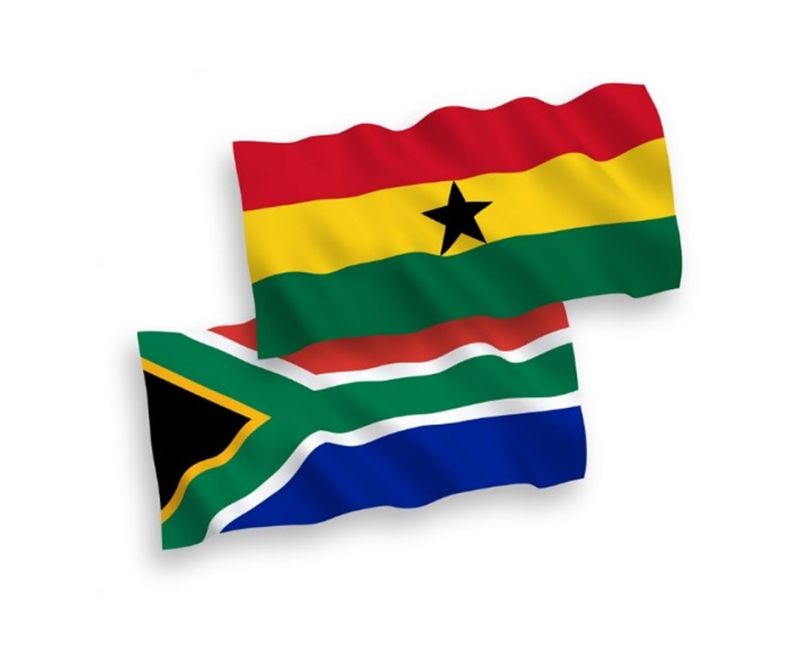
This opinion article explores the educational systems of Ghana and South Africa, focusing on their structures, similarities, and differences, revealing the critical role of education in driving national progress intertwining with a visual conceptual model.
Ghana\’s Educational Framework Towards Rigorous Transitions
Ghana\’s educational system begins with basic education, encompassing primary school, junior high school (JHS), and senior high school (SHS). This foundational level, spanning nine years, is both free and compulsory for all children. Primary education spans six years, admitting children aged five or six who transition from kindergarten. Admission is based on developmental readiness, including the ability to sit upright, listen, read, and write. Academic performance governs progression from Class 1 to Class 6, and students transition to JHS based on their school reports. Junior high school, lasting three years, culminates in the Basic Education Certificate Examination (BECE), which determines eligibility for SHS. Many institutions integrate primary and JHS levels, ensuring seamless transitions for students.
At the senior high school level, the curriculum is categorized into academic, technical, and vocational pathways. The SHS program lasts three years, with a computerized placement system determining admission after the BECE. Academic programs combine theoretical and practical learning, preparing students for tertiary education. Technical and vocational education, grouped under Technical and Vocational Education and Training (TVET), offers practical skills in mechanics, craftsmanship, and related fields. Despite their specialized focus, TVET graduates can still pursue higher education after meeting examination requirements.
South Africa\’s Educational Framework in Bridging Equity and Progression
South Africa’s basic education system is similarly comprehensive, free, and compulsory for all learners. It encompasses primary and secondary levels divided into the foundation, intermediate, and senior phases. The foundation phase (Grades 1–3) focuses on developing literacy, numeracy, and life skills, while the intermediate phase (Grades 4–6) builds on these fundamentals. The senior phase (Grades 7–9) transitions learners into lower secondary education, with internal assessments ensuring progression without external examinations.
High school in South Africa spans Grades 8–12, offering academic and vocational tracks. Learners are promoted based on performance and age, minimizing retention risks. From Grade 10 onward, students can choose vocational pathways under TVET, aligning with their career aspirations. The culmination of high school education is the National Senior Certificate (NSC), also known as the MATRIC exam, which is essential for tertiary admission. This structured approach integrates flexibility and inclusivity, fostering smoother transitions through the education system.
Comparative Insights of Education in Ghana and South Africa
Following inspirations from the above, undoubtedly, education serves as the cornerstone of national development, shaping future generations and empowering societies. Ghana and South Africa, two prominent African nations, boasts of educational systems which are both deeply rooted in their unique histories, cultural values, and socio-economic contexts. Despite their shared commitment to free and compulsory basic education, the structural designs, progression mechanisms, and emphasis on technical and vocational training reveal intriguing contrasts and parallels. By examining these facets, we uncover the nuanced strategies each nation employs to balance academic excellence with inclusivity, practical skills, and lifelong learning opportunities. The table below offers a detailed comparison of their educational frameworks, shedding light on the distinct pathways that define learning in these vibrant countries.
Table: Comparative Analysis of Education in Ghana and South Africa
| Category | Ghana | South Africa |
| Structural Parallels and Divergences | Ghana\’s education system is distinctly segmented into primary, junior high school (JHS), and senior high school (SHS), with external exams marking each transition. This segmentation emphasizes academic rigor and performance-based progression. | South Africa employs a more integrated structure, where Grades 7–9 are part of basic education, ensuring smoother transitions without external examinations. This approach supports a holistic educational experience. |
| Progression Mechanisms | Progression in Ghana relies heavily on standardized examinations such as the Basic Education Certificate Examination (BECE) and the West African Senior School Certificate Examination (WASSCE). While this ensures meritocracy, it may disadvantage students less adept at exams. | South Africa prioritizes internal assessments and continuous evaluation to promote learners across grades, minimizing dropout rates and enhancing inclusivity. However, the absence of standardized transitions could impact academic rigor. |
| Basic Education Coverage | In Ghana, basic education encompasses primary and JHS levels. These phases are distinct, with external examinations marking the transition from one level to the next. | South Africa categorizes Grades 7–9 as part of basic education, creating a seamless progression from lower to upper primary and into secondary education. This structure reduces the pressure of transitions between phases. |
| TVET Systems | Technical and Vocational Education and Training (TVET) in Ghana is introduced at the SHS level, catering to students opting for specialized skills training after the BECE. TVET programs emphasize practical training but maintain pathways to tertiary education. | In South Africa, vocational education begins earlier, with learners opting for technical streams from Grade 10. This early introduction fosters career alignment and equips students with practical skills at an earlier stage. |
Source: Authors own Construct, 2025
The comparative table above, highlights the similarities and distinctions between Ghana’s and South Africa’s education systems, emphasizing their unique approaches to delivering quality education. Here, it is made evidenced that Ghana\’s focus on examination-based transitions contrasts with South Africa’s inclusive, continuous assessment methods. The distinction in how basic education and TVET are structured reflects broader educational philosophies, with Ghana prioritizing academic rigor and South Africa emphasizing accessibility and holistic learning.
Both systems demonstrate commitment to fostering practical skills and facilitating transitions to tertiary education. Their strengths and challenges present opportunities for mutual learning and potential reforms, ensuring educational systems align with global standards while addressing national needs.
Conceptual Model of Ghana and South Africa\’s Educational Systems
The conceptual model captured in the figure below illuminates the dynamic interplay between Ghana and South Africa’s educational systems, offering a lens to explore structural parallels, progression mechanisms, and the role of technical and vocational education. This innovative framework captures the shared aspirations and unique strategies shaping each system, highlighting their interconnectedness while addressing distinct societal needs. It serves as a blueprint for understanding educational diversity and fostering transformative, inclusive learning in Africa.

Source: Authors Own Formation, 2025
The conceptual model vividly illustrates the interconnectedness between Ghana and South Africa\’s education systems, emphasizing critical elements such as basic education, secondary education, technical and vocational education (TVET), and tertiary education. The framework highlights how these systems are structured to achieve inclusivity, progression, and national development while underscoring their unique distinctions.
In basic education, both countries emphasize compulsory and free education. Ghana adopts a six-year primary education followed by a three-year junior high school, whereas South Africa extends primary education to seven years, divided into foundational, intermediate, and senior phases. This structural divergence underscores South Africa\’s gradual phase approach, promoting holistic foundational skills.
Secondary education in Ghana necessitates external examinations like BECE for progression, contrasting with South Africa\’s seamless internal assessments. South Africa\’s high school extends to grade 12, enabling learners to specialize in practical or academic pathways earlier, compared to Ghana’s centralized, examination-driven progression.
The TVET sector in both countries reflects a shared commitment to practical skill acquisition, but South Africa integrates it earlier, ensuring seamless transitions.
Finally, tertiary education showcases aligned goals of degree offerings, yet Ghana incorporates HNDs as intermediate qualifications, reflecting flexibility in higher education.
This interconnected framework underscores mutual aspirations for quality education while celebrating distinct, context-specific approaches.
Lessons for Africa in Charting Educational Excellence
The comparison of educational systems in Ghana and South Africa underscores the importance of context-specific policies. Ghana’s examination-based progression ensures accountability but could benefit from reducing the reliance on standardized tests. South Africa’s inclusive approach minimizes educational disruptions but might consider incorporating standardized assessments to enhance quality control. Both countries demonstrate the value of integrating practical skills and digital literacy into curricula, reflecting global educational trends. Expanding TVET opportunities and strengthening access to tertiary education remain pivotal for addressing Africa’s socio-economic challenges.
Conclusion
Education is the cornerstone of societal progress, bridging aspirations and achievements. The systems in Ghana and South Africa, though distinct, exemplify resilience, inclusivity, and adaptability. These models inspire other African nations to innovate, fostering educational excellence across the continent. By blending their strengths thus rigor in Ghana and inclusivity in South Africa, both nations can champion a transformative vision for education. As Mandela and Einstein aptly noted, education is not merely about learning facts but about equipping individuals with the power to reshape their world.
“Education is the most powerful weapon which you can use to change the world.\”
– Nelson Mandela
Empowered minds create empowered societies; education unlocks the door to a prosperous future