
Author: Iddrisu Kumbundoo
Journalist, Dagbon FM
Tingoli, a serene farming community tucked southwest of Nyankpala in Ghana’s Tolon District, paints a poignant picture of resilience amid adversity. Just an hour’s drive from Tamale, the regional capital, this small village has seen the flicker of progress with its connection to the national electricity grid. Yet, the most basic of necessities, thus clean, drinkable water, remains a cruel illusion.

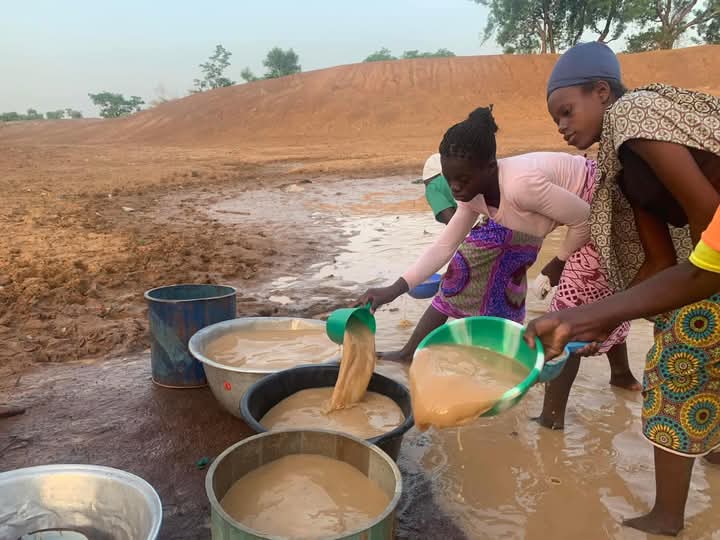
For the people of Tingoli, water isn’t just a need; it’s an unending battle. Every drop they consume is hard-fought, sourced from a muddy dugout in the neighboring village of Dasuyili. This fragile lifeline dries up shortly after the rainy season around June every year, forcing residents into a relentless and exhausting cycle of water hunting. Their story is a stark reminder of how the absence of safe drinking water can erode the fabric of community life and development.
The Daily Struggle
For Mariama Amadu, a local resident, the water crisis touches every aspect of indigenous people\’s daily lives. She opines that “our children are not able to go to school on time. Our businesses and farm work have also been affected because of the lack of water. We need help,” she pleads, with her voice echoing the desperation of an entire community. The daily trek to Dasuyili’s dugout consumes productive hours that could otherwise be utilized on education, farming, or economic activities.
But the challenge goes beyond time lost. The dugout is a shared resource, frequented by both domestic and wild animals, rendering the water unwholesome and a breeding ground for disease. When the rains cease, the dugout vanishes, leaving Tingoli’s residents to scramble for alternative sources, often miles away.
A Heavy Burden on Women

In Ghana, it is a common scenario to have women manage the affairs of the home front, including cooking, cleaning, etc., all of which demand the use of clean water, which is to be made available by women. In the light of this, the water crisis in Tingoli disproportionately impacts its women, who bear the responsibility of fetching water for their households. Alhassan Hadija, another resident, captures the emotional toll of this labor. “Walking long distances in search of water leaves us too tired at night to even fulfill our marital obligations,” she says, her voice tinged with exhaustion. The hours spent hauling water rob women of opportunities for rest, family bonding, or income-generating activities.
This struggle is not just a burden; it is a barrier that holds back the dreams and aspirations of an entire generation. Women like Mariama and Alhassan are left with little time to engage in meaningful economic ventures, limiting their capacity to lift their families out of poverty.
Brewing Tensions and Broken Bonds

The reliance on Dasuyili’s dugout has also strained the delicate ties between Tingoli and its neighboring village. “Sometimes, the youth of Dasuyili prevent our women from fetching water to save the dugout for themselves,” explains Lukman Alidu, a Tingoli resident. What was once a bond of peaceful coexistence has been frayed by the competition for a scarce resource.
These tensions underscore the broader implications of the water crisis. It’s not just about health or convenience; it’s about preserving social harmony and fostering community cooperation. In Tingoli, the absence of water threatens to erode the very fabric of its society.
The Illusion of Relief

At the heart of Tingoli stands a beautiful mosque, a symbol of faith and resilience, alongside a mechanized borehole provided by an Islamic charity. To an outsider, this might seem like a beacon of hope in a parched land. Yet this borehole operates only during the rainy season, leaving the community dependent on unsafe water for most of the year.
Chief Naa Abdulai Musah speaks to the grim reality his people face: “Our people have been exposed to waterborne diseases like diarrhoea, dysentery, and cholera. Water remains a major challenge here. We urgently need help from the government, benevolent individuals, and organizations to address this crisis.”
The borehole, while a step in the right direction, highlights the need for sustainable solutions. Temporary relief is not enough; Tingoli needs a reliable and permanent source of potable water to secure its future.
The Ripple Effect
The absence of clean water casts a long shadow over every aspect of life in Tingoli. Farming, the community’s primary livelihood, has been disrupted as residents spend their mornings in search of water instead of tending their fields. Shea processing, another key economic activity, has slowed to a crawl, limiting income and opportunities for growth.
Education is no exception. Children arrive at school late or miss classes altogether, their mornings consumed by the quest for water. The cycle of poverty tightens its grip as the lack of water undermines the community’s efforts to rise above its challenges.
A Cry for Change
Tingoli’s story is a testament to the critical importance of clean and safe drinking water. It’s not just a matter of health; it’s about dignity, opportunity, and survival in alignment with the sustainable development goals. As Chief Musah poignantly puts it, “If water is life, then Tingoli is gasping for breath.”
The people of Tingoli are not asking for luxuries; they are asking for the basic amenities, a chance to live with dignity, to educate their children, to farm their land, and to dream of a better future. Their plea is a call to action for governments, organizations, and individuals to come together and make clean water a reality for this resilient community.
Hope in Action
Tingoli’s plight is not unique, but its resolve is inspiring. With the right interventions embedded in mechanized boreholes, sustainable water management systems, and community engagement, this small farming village can transform its story from one of struggle to one of triumph.
The thirst of Tingoli is a thirst for life itself. It is time to quench it.
We really need to do better as a country.
It’s sad to see this in this age and time.
Let’s push for our politicians to do better.
Beautiful and insightful write up.
It’s time to quench it!!!
Amazing work done. Let’s push it till we see a change!
Thanks a lot for this wonderful comment Ms Jemi, we appreciate you.
Except more from DevAfrica Institute this 2025, Happy New Year
We really need to do something as a country because some of the people need marriage and they meet wrong person, it’s only a prayer that’s can heal everything
Thanks a lot for this wonderful comment Ms Jemi, we appreciate you.
Except more from DevAfrica Institute this 2025, Happy New Year